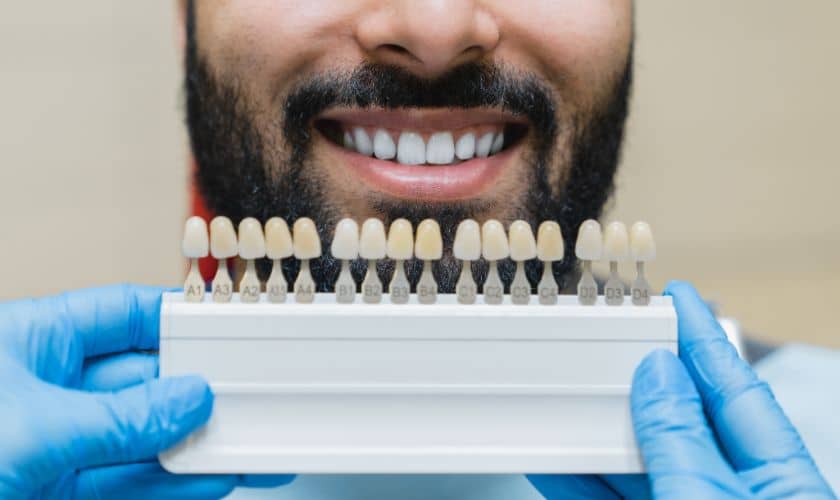
Dental veneers are thin, custom-made shell of tooth-colored material that is designed to cover the front surface of your teeth. They are an option for people who want to improve the appearance of their smile. Veneers can be made from porcelain or composite resin, and they are bonded to the front of your teeth.
Veneers are used to treat a variety of cosmetic dental concerns, including:
- Worn-down teeth
- Chipped or broken teeth
- Discolored teeth
- Gaps between teeth
- Misaligned or misshapen teeth
If you are considering dental veneers, it is important to consult with a qualified cosmetic dentist to ensure that they are the right treatment for you. The dentist will evaluate your oral health and discuss your goals for treatment before creating a custom treatment plan.
The Benefits Of Dental Veneers
Dental veneers are one of the most popular cosmetic dentistry procedures. They are thin, custom-made shells that are bonded to the front of your teeth. Veneers can be used to improve the appearance of your smile and protect your teeth from further damage.
There are many benefits of dental veneers, including:
1. Improve Your Smile: Dental veneers can be used to cover up stained, chipped, or misshapen teeth. They can also be used to close gaps between teeth or change the shape or color of your teeth. Veneers can give you a beautiful, natural-looking smile that you’ll be proud to show off.
2. Protect Your Teeth: Dental veneers can also be used to protect your teeth from further damage. They can provide a barrier against staining and other forms of wear and tear. Veneers can also help to strengthen weak or damaged teeth.
3. Last Longer Than Other Treatments: Dental veneers are made from high-quality materials that are designed to last for many years with proper care. In fact, they often last longer than other cosmetic treatments such as tooth whitening or bonding. This means you’ll get more value for your investment in dental veneers.
4. Low Maintenance: Once dental veneers are bonded to your teeth, they require very little maintenance. You’ll
How To Know If Dental Veneers Are Right For You
If you’re considering getting dental veneers, it’s important to do your research and make sure they’re right for you. Here are a few things to keep in mind:
1. Veneers are a permanent solution. Once they’re placed, they can’t be removed or replaced, so it’s important to be sure you want them before making the commitment.
2. Veneers aren’t right for everyone. If you have healthy teeth and gums, there’s no need to get veneers. In fact, some dentists may even recommend against them if they think your natural teeth are strong enough.
3. Veneers can change the way your teeth look and feel. If you’re not ready for a drastic change, then veneers may not be right for you.
4. Veneers require regular maintenance. Just like your natural teeth, veneers need to be brushed and flossed regularly to avoid staining and other problems.
If you’re considering getting dental veneers, talk to your dentist about whether or not they’re right for you. They can help you weigh the pros and cons and make an informed decision about whether or not this treatment is right for you
The Different Types Of Dental Veneers
When considering dental veneers, it is important to be aware of the different types available. Porcelain veneers are the most popular type of veneer, as they are durable and natural-looking. Composite veneers are not as durable as porcelain veneers and may not last as long. It is also important to note that there are temporary and permanent options available for both porcelain and composite veneers.
How To Care For Your Dental Veneers
Dental veneers are a popular cosmetic dentistry treatment that can give you a beautiful, bright smile. But like all dental treatments, they require proper care and maintenance to keep them looking their best. Here are some tips on how to care for your dental veneers:
1.Brush and floss your teeth twice a day – Just as you would with your natural teeth, it’s important to brush and floss your veneers twice a day to remove plaque and bacteria. Use a soft-bristled toothbrush and be gentle when brushing around the edges of the veneers.
2.Avoid hard foods – Biting into hard foods can crack or chip your dental veneers, so it’s best to avoid them altogether. Steer clear of candy, ice, nuts, and other hard snacks.
3.Don’t use your teeth as tools – Your teeth are not meant to be used as tools, so don’t use them to open packages or bottles. Doing so can damage the veneers.
4.See your dentist regularly – Be sure to see your dentist for regular checkups and cleanings. They can check for any wear or damage to the veneers and perform any necessary repairs or replacements.
The Bottomline
For those considering dental veneers, there are a few things to consider before taking the plunge. It is important to talk with your dentist about the best type of veneers for you and side effects associated with them. You should also make sure that you have realistic expectations as far as what they can do and how long they will last. With these considerations in mind, it is possible to make an informed decision on whether or not dental veneers are right for you.