Orthodontics, the branch of dentistry focused on correcting misaligned teeth and jaws, has a rich history of evolving techniques aimed at improving smiles and overall oral health. In this article, we’ll take a journey through the history of orthodontics, exploring how techniques have developed over time to help individuals achieve lifelong smiles.
Ancient Orthodontics
Orthodontics has ancient roots dating back to early civilizations:
Egyptians and Etruscans
Archaeological findings reveal that ancient Egyptians and Etruscans attempted to straighten teeth using primitive orthodontic devices made of materials like catgut (a type of cord) and gold wires.
Romans
Romans also showed interest in dental alignment, with some using finger pressure to move teeth into more desirable positions.
Greeks
Hippocrates, the ancient Greek physician, wrote about dental irregularities and suggested remedies for correcting them.
The Dawn Of Modern Orthodontics
Modern orthodontics began to take shape in the 18th and 19th centuries:
Pierre Fauchard
Often called the “Father of Modern Dentistry,” Fauchard contributed to orthodontics by introducing the bandeau, a device to expand the arch of the mouth.
Dental Impressions
Advances in dental impressions allowed for the creation of more accurate orthodontic appliances.
20th Century Innovations
The 20th century marked significant advancements in orthodontics
Edward Angle
Often referred to as the “Father of Modern Orthodontics,” Angle developed a comprehensive classification system for malocclusions (misaligned teeth) and introduced various orthodontic techniques and appliances.
Braces
Early 20th-century orthodontics saw the development of braces consisting of bands, wires, and brackets. These laid the foundation for the braces used today.
Headgear and Functional Appliances
Orthodontists introduced headgear and functional appliances to correct complex malocclusions and jaw discrepancies.
Contemporary Orthodontics
Orthodontics continues to evolve in the 21st century
Invisalign
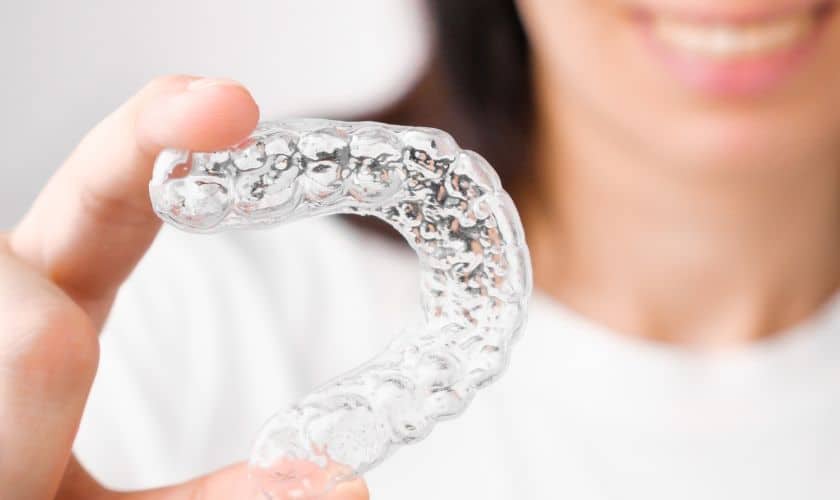
The introduction of Invisalign in 1997 revolutionized orthodontics. Invisalign offers clear, removable aligners that provide a discreet and comfortable way to straighten teeth.
Digital Imaging
Advances in digital imaging have improved treatment planning and monitoring, leading to more precise and efficient orthodontic care.
Customized Treatment
Orthodontic treatment is increasingly tailored to each patient’s unique needs and preferences, optimizing results and patient comfort.
Interdisciplinary Care
Orthodontists often collaborate with other dental specialists to provide comprehensive treatment, ensuring not only straight teeth but also optimal oral health and function.
The Lifelong Impact Of Orthodontics
Orthodontic treatments offer lasting benefits:
Improved Oral Health
Properly aligned teeth are easier to clean and maintain, reducing the risk of tooth decay and gum disease.
Enhanced Function
Correcting bite issues and misalignment improves chewing efficiency and speech.
Boosted Confidence
A straight and attractive smile can boost self-esteem and confidence.
Prevention of Dental Problems
Early orthodontic interventions can prevent more severe dental issues from developing later in life.
The Bottom Line
The evolution of orthodontic techniques has transformed it from ancient practices to modern, patient-centered care. These advancements ensure that individuals of all ages can enjoy lifelong smiles with optimal oral health and function. Orthodontics has truly stood the test of time as a key component of dental care, enhancing smiles and overall well-being.